Product Introduction
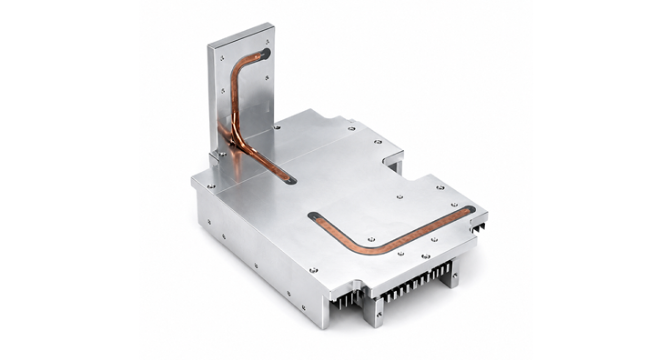
The Copper-Embedded Aluminum Heat Sink CNC Component is a precision thermal management part developed for equipment that generates concentrated heat during continuous operation. It uses an aluminum base structure combined with embedded copper sections to improve heat transfer efficiency while keeping the component lightweight, machinable, and suitable for customized installation requirements.
Compared with ordinary aluminum heat sinks, this structure provides stronger thermal response in critical heat areas. The copper section supports faster heat conduction, while the aluminum body offers good structural stability, machining flexibility, and cost-effective production for customized projects.
This product is suitable for OEM and ODM hardware projects where cooling performance, part fit, surface reliability, and batch consistency all matter. Shenzhen Fuwanglong Hardware Products Co., Ltd. supports manufacturing based on customer drawings, samples, assembly requirements, and final equipment applications.
Key Specifications & Parameters
Product Type: Copper-embedded aluminum heat sink CNC component
Main Materials: Aluminum alloy body with embedded copper heat transfer structure
Manufacturing Process: CNC machining, slot machining, copper embedding, surface treatment, inspection, and assembly support
Surface Treatment Options: Anodizing, anti-oxidation treatment, nickel plating, passivation, or customized surface finishing
Customization Method: Produced according to customer drawings, samples, 3D files, thermal requirements, and installation conditions
Application Direction: Server hardware, energy storage systems, telecom equipment, industrial electronics, power modules, and passive cooling assemblies
OEM/ODM Support: Available for prototype development, engineering adjustment, small-batch production, and mass production
Quality Control Focus: Material inspection, dimensional inspection, slot accuracy, copper fit, surface condition, flatness, and final appearance checking
Main Functions
Efficient heat transfer
The embedded copper section helps move heat away from concentrated hot spots more effectively than aluminum alone. This is useful for server hardware, power electronics, telecom equipment, and other applications where stable cooling performance is required during long operating cycles.
Passive cooling support
This component can be used in passive cooling structures where airflow may be limited or fanless design is preferred. The heat sink helps dissipate heat through material conduction and surface area without depending entirely on active cooling devices.
Structural installation support
In addition to thermal performance, the part can be designed with mounting holes, flat contact areas, grooves, steps, and positioning features. This allows it to serve as both a cooling component and a structural hardware part in the final equipment.
Custom thermal layout adaptation
The copper embedding position, aluminum base size, thickness, hole layout, and surface finish can be adjusted according to the customer’s equipment design. This makes it suitable for projects that require non-standard thermal management solutions.
Improved equipment reliability
Stable heat dissipation helps reduce thermal stress on electronic modules and surrounding components. For long-running industrial, computing, and energy equipment, better heat management can contribute to more reliable operation.
OEM production compatibility
The component can be developed from customer drawings and produced through repeatable machining and inspection processes. This makes it suitable for prototype validation, engineering samples, and batch production for OEM hardware projects.
Specific Application Scenarios
Server and data center hardware
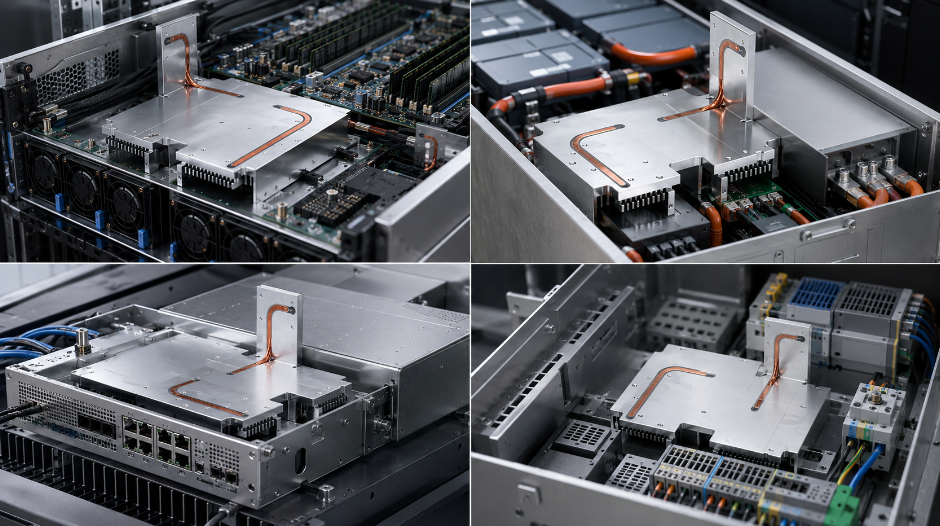
The heat sink can be used in server equipment, computing hardware, and data center-related devices where continuous operation creates concentrated heat. Its copper-embedded structure helps support stable thermal transfer in compact hardware layouts.
Energy storage system components
Energy storage equipment often requires durable hardware parts that can support both structure and thermal performance. This type of heat sink can be applied to power modules, control units, or related thermal management assemblies in ESS projects.
Telecom and communication equipment
Telecom devices may operate for long periods in demanding environments. A customized copper-embedded heat sink can support passive heat dissipation for communication modules, base station hardware, and network equipment assemblies.
Industrial control electronics
Industrial electronic systems often require reliable metal components with accurate machining and stable surface treatment. This heat sink can be used in control units, power conversion equipment, automation hardware, and industrial electronic enclosures.
Power module cooling assemblies
For power-related components, heat concentration can affect performance and stability. The aluminum-copper combined structure helps transfer heat from power modules or related contact surfaces to a wider dissipation area.
Custom equipment thermal hardware
The component is suitable for customized machinery, test equipment, electronic devices, and hardware systems that require a tailored cooling structure. Size, material, hole position, finish, and copper layout can be adjusted based on project needs.
FAQ
Q1: Can this heat sink be customized according to our drawings?
A1: Yes. The component can be manufactured based on customer drawings, samples, 3D models, assembly requirements, and thermal design needs.
Q2: What is the advantage of embedding copper into an aluminum heat sink?
A2: Copper provides better heat conduction in critical areas, while aluminum offers lower weight, good machinability, and structural stability. Combining both materials helps improve thermal performance while keeping the part practical for customized production.
Q3: Is this component suitable for passive cooling applications?
A3: Yes. The product can be used in passive cooling structures where stable heat transfer is required without relying only on fans or active cooling devices.
Q4: Which industries commonly use this type of heat sink component?
A4: It can be used in server hardware, data center equipment, energy storage systems, telecom devices, power modules, industrial electronics, and customized equipment cooling assemblies.
Q5: What surface treatments are available?
A5: Common options include anodizing, anti-oxidation treatment, nickel plating, passivation, or customized surface treatment based on the operating environment and appearance requirements.
Q6: Can you support prototype samples before mass production?
A6: Yes. Prototype development and engineering samples can be supported before batch production, helping customers verify structure, fit, surface condition, and thermal application requirements.
Q7: What information is needed for quotation?
A7: Drawings, material requirements, quantity, surface treatment, tolerance requirements, thermal application details, and assembly conditions are helpful for accurate evaluation.



 Phone
Phone